The Electric Atlas Revolution: How Boston Dynamics is Redefining Factory Work


I have to admit, I’ve been obsessed with Boston Dynamics videos for years. You probably know the ones I’m talking about—robots doing parkour, dancing to “Do You Love Me,” or getting bullied by engineers with hockey sticks. It was entertaining, sure. But it always felt like a science experiment.
That era is over.
With the retirement of the hydraulic Atlas and the introduction of the fully electric Atlas, we aren’t watching a demo reel anymore. We are watching the birth of a commercial product. I’ve been digging into the details of Atlas’s deployment at Hyundai’s factories, and frankly, what I found is both incredibly impressive and a little bit terrifying.
Let’s dive into why this specific robot changes everything.
The End of “Biological Biomimicry”

For decades, roboticists tried to make humanoids move exactly like us. They mimicked our gait, our balance, and our limitations.
When I saw the new electric Atlas stand up for the first time, I actually gasped. It didn’t roll over like a human; it contorted its legs backward, pivoted its hips, and stood up like something out of a sci-fi horror movie. And that’s the genius of it.

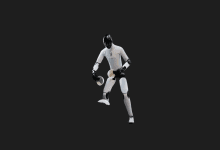
Boston Dynamics has stopped trying to copy humans and started trying to exceed them.
Here is why this design shift matters:
- 360-Degree Freedom: The new Atlas doesn’t have a “front” or “back.” It can rotate its head and torso independent of its legs.
- Efficiency: A human has to shuffle their feet to turn around. Atlas just swivels. In a tight factory aisle, this saves precious seconds and energy.
- Strength-to-Weight Ratio: Without heavy hydraulic pumps and fluids, the electric actuators provide immense power in a smaller, quieter package.
Why Hyundai? The Perfect Proving Ground

It’s no secret that Hyundai owns a controlling interest in Boston Dynamics. But sending Atlas to the automotive production line isn’t just a synergy play; it’s a stress test.
I’ve looked at the specs, and this isn’t about replacing the guy who bolts on a tire. It’s about cognitive manipulation. The new Atlas uses advanced AI and machine learning (Reinforcement Learning) to adapt to real-time situations.
What is Atlas actually doing there?
- Complex Manipulation: Handling heavy, irregularly shaped car parts that traditional robotic arms can’t reach.
- Quality Control: Using computer vision to spot defects better than the human eye.
- Hazardous Tasks: Taking over jobs that involve toxic fumes, extreme heat, or ergonomic injuries for human workers.
I genuinely believe that within five years, seeing a humanoid robot in a car factory will be as common as seeing a forklift.
Hydraulic vs. Electric: Why the Switch?

I used to love the sound of the old hydraulic Atlas—it sounded like it was breathing heavy, fighting gravity. But let’s be real: hydraulics are a nightmare for mass production. They leak, they overheat, and they require constant maintenance.
The All-Electric Atlas is the answer to “scalability.”
- Silence: It’s quiet. You can actually hear yourself think next to it.
- Precision: Electric motors allow for millimetric control that fluid dynamics struggle to match.
- Durability: Fewer moving fluids mean fewer points of failure.
The “Uncanny Valley” Factor

Here is where I get a bit philosophical. Watching this robot move feels… alien.
Because its joints defy human constraints, it triggers a primal instinct in us. It moves with a logic that is purely mathematical, devoid of biological habit. I find myself oscillating between being in awe of the engineering and feeling a slight chill down my spine.
But maybe that’s the point. It’s a tool, not a person. By making it move in non-human ways, Boston Dynamics is visually reminding us that this is a machine designed for output, not a synthetic human designed for friendship.
My Final Thoughts
The deployment of Atlas at Hyundai is the “iPhone moment” for humanoid robotics. We have moved past the research lab. The hardware is ready, the AI is learning, and the factories are opening their doors.
I’m excited to see where this goes, but I also wonder about the transition period. It’s one thing to watch a robot on YouTube; it’s another to stand next to one on the assembly line while it rotates its torso 180 degrees to hand you a wrench.
Let’s Discuss
I’m really curious about your perspective on this shift.
If you walked into your workplace tomorrow and saw an electric Atlas working at the desk or station next to you, would you feel safe, or would you be looking for a new job?
Let me know in the comments below!
You Might Also Like;